Impostazioni
 Consegna rapida
 Spedizione gratuita
 Incoterms
 Modalità di pagamento


 Prodotto Marketplace
Codice produttore PTS-00207-201
LORA SX1276 9115MHZ UNO SHIELD
PTSolns

Wireless LoRa Wired I2C / TWI SPI Environmental Humidity Temperature Arduino Qwiic
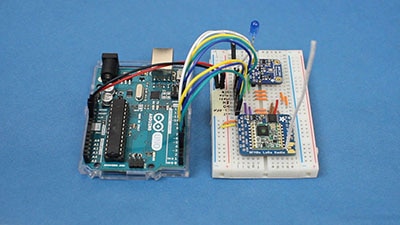
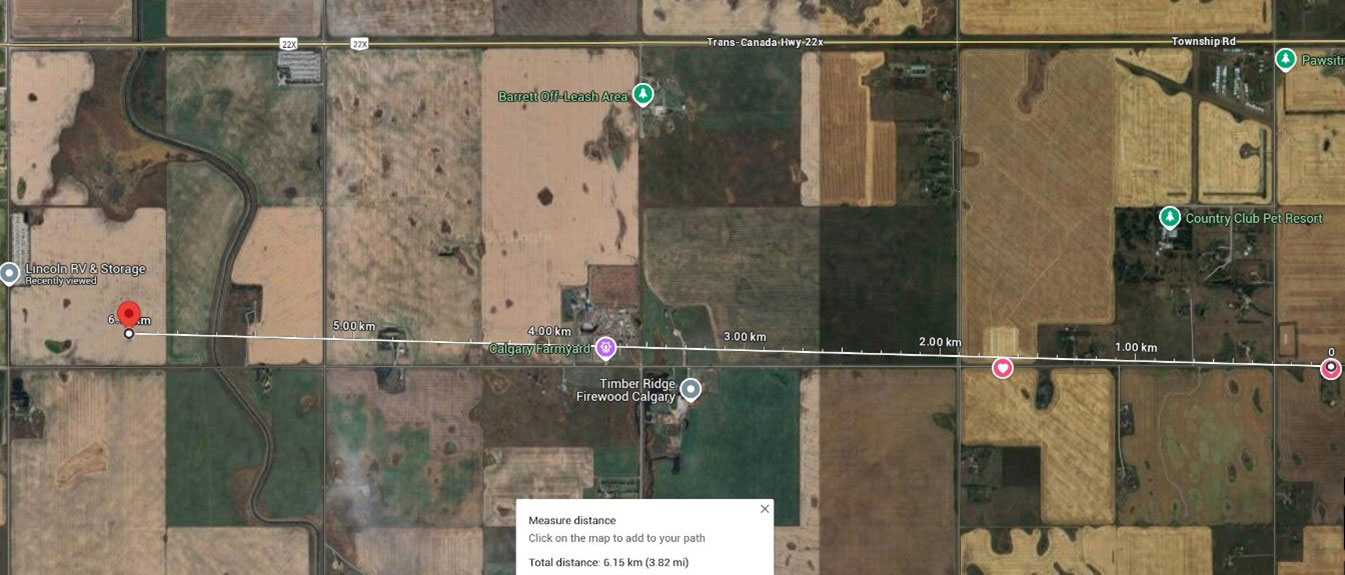
In terms of range tests, we're always looking for more! For this post, we'll be conducting one of the longest range tests with the PTSolns LoRa SX1276 shield. A friend of our shop recently took our PTSolns LoRa SX1276 915MHz Shield out into the countryside to test just how far radio waves would travel. The results? Rock-solid connection at over 6.15 kilometers (3.82 miles).
In this blog, we’ll explore the hardware that’s being used, the science behind the transmission, and just how impressive a feat it is to achieve a 6km range.
Before we dive into the coordinates, let’s talk about the gear. The PTSolns LoRa Shield is designed to make long-range wireless communication "plug & play" ready for the Arduino Uno.
Key features include:
Our friend set up the transmitter node at a stationary location and moved away from the node, checking for successful packets at various intervals. As you can see from the GPS data, the signal traveled 6.15km. Although LoRa is advertised for long distances, getting this in a non-ideal environment is proof of the sensitivity of the SX1276 chip and the efficiency of the PTSolns board design.
In a perfect vacuum, radio waves travel forever. But on Earth, we have two major difficulties: the Fresnel zone and the curvature of the Earth.
Most people think that 'line of sight' means 'if I can see it with my eyes, then it can see me.' Well, it’s not like that in radio. We use the Fresnel Zone, which is an elliptical area between two points. If over 20% of this area is blocked by hills, trees, or buildings, it affects the signal.
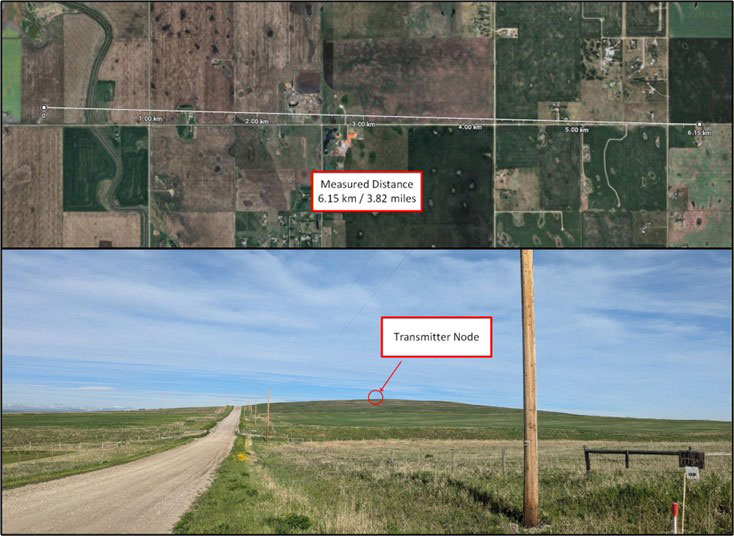
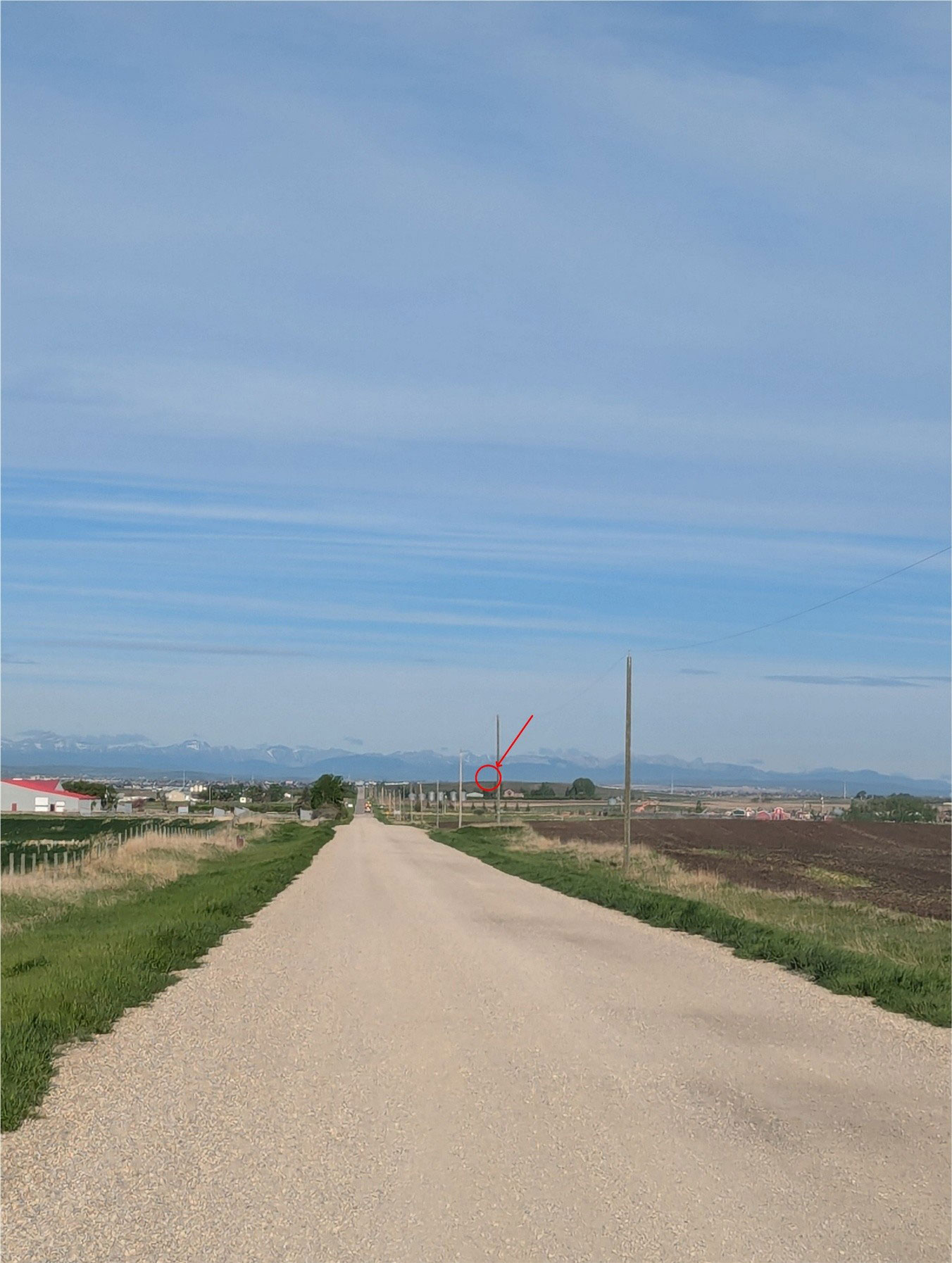
As you can see from the image in our test, the "Transmitter Node" is placed on a slight rise, and the ground between the two points is not flat. Even the ground and the grass can "absorb" the signal if the Fresnel zone is not clear.
Believe it or not, at 6km, the earth's curvature begins to play a role too! If the antennas are too low to the ground (for example, at waist level), the actual curve of the earth can cause the receiver to become "hidden" from the transmitter. To reach 6km using small dipole antennas in the field is an excellent achievement.
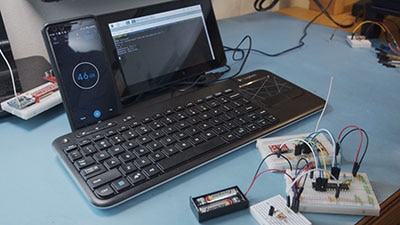
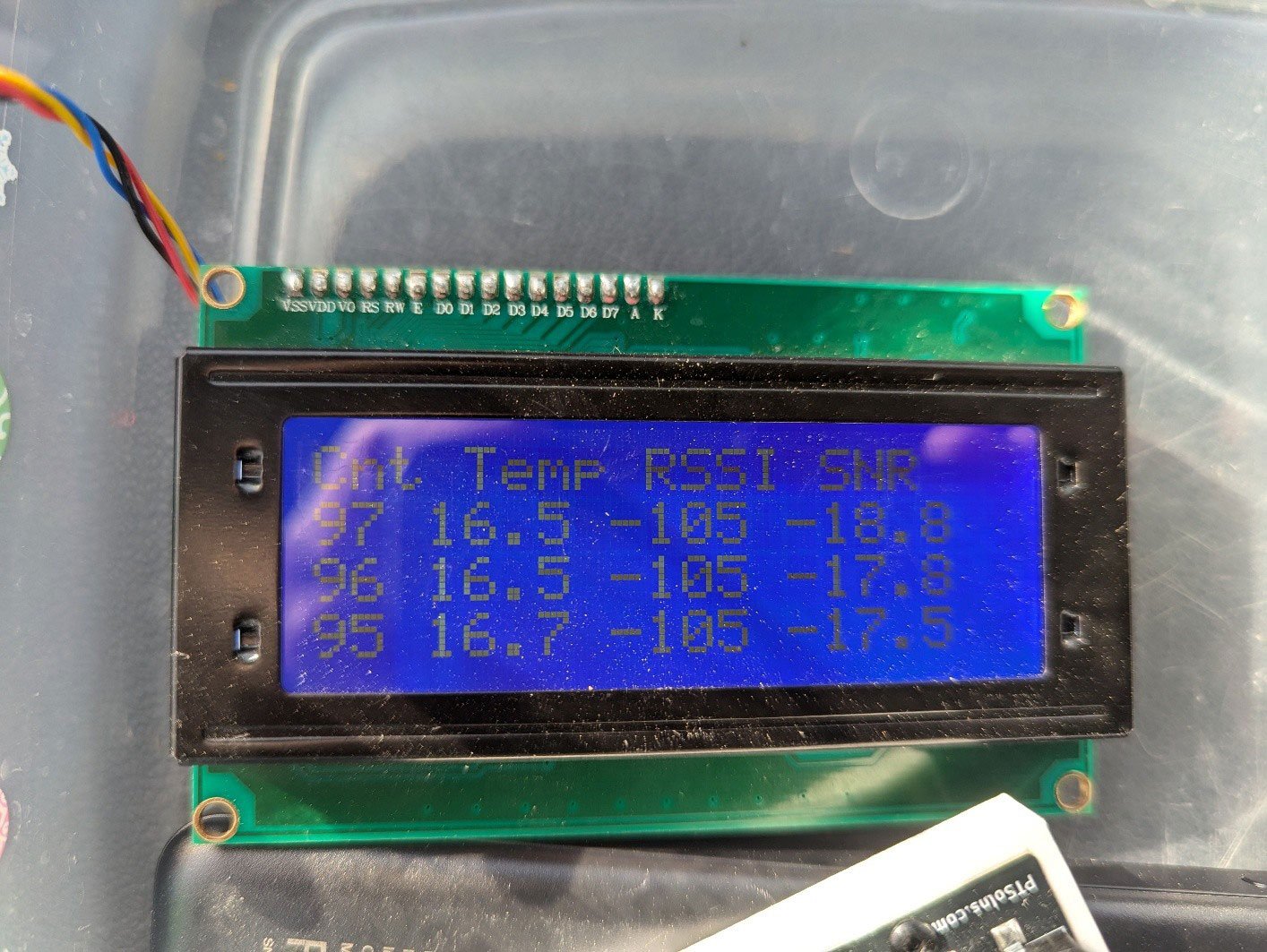
As for the receiver side, we connected a simple I2C LCD to monitor the received data packets in real time. As you can see in the printout below, the mobile node has received the packet count (Cnt) and live environment data (Temp at 16.5°C) directly from the environment using the AHT20 sensor onboard the transmitter. However, the most impressive part of the LoRa technology is the last two columns: RSSI (Received Signal Strength Indicator) and SNR (Signal-to-Noise Ratio). Despite the distance of 6.15km, the shield has managed to stay connected with an RSSI of -105 dBm. More amazingly, the SNR is ranging from -18.8 dB. A negative SNR indicates that the LoRa signal is literally buried under the noise floor of the RF environment, yet the SX1276 chip is perfectly capable of decoding the transmission. This is the magic of the LoRa technology's "Chirp Spread Spectrum" in action!
If you are building a remote sensor for a farm, a neighborhood mesh network, or a garage door monitor that’s just a bit too far for Wi-Fi, LoRa is your go-to. Unlike Wi-Fi or Bluetooth, LoRa prioritizes robustness, not speed. It uses "Chirp Spread Spectrum" technology, ensuring it remains connected even when its signal is incredibly weak, even weaker than background noise!
Our range test of 6.15km proves that the PTSolns LoRa SX1276 Shield is not just for desktop hobbyist use! It is a serious tool for long-range data transmission. Whether you're transmitting to a LoRaWAN gateway or creating your own direct network, this shield has got the range.
Happy Tinkering!
PTSolns supplier center: https://www.digikey.com/en/supplier-centers/ptsolns-pylon-technology-solutions
PTSolns Documentation Repository: https://docs.ptsolns.com